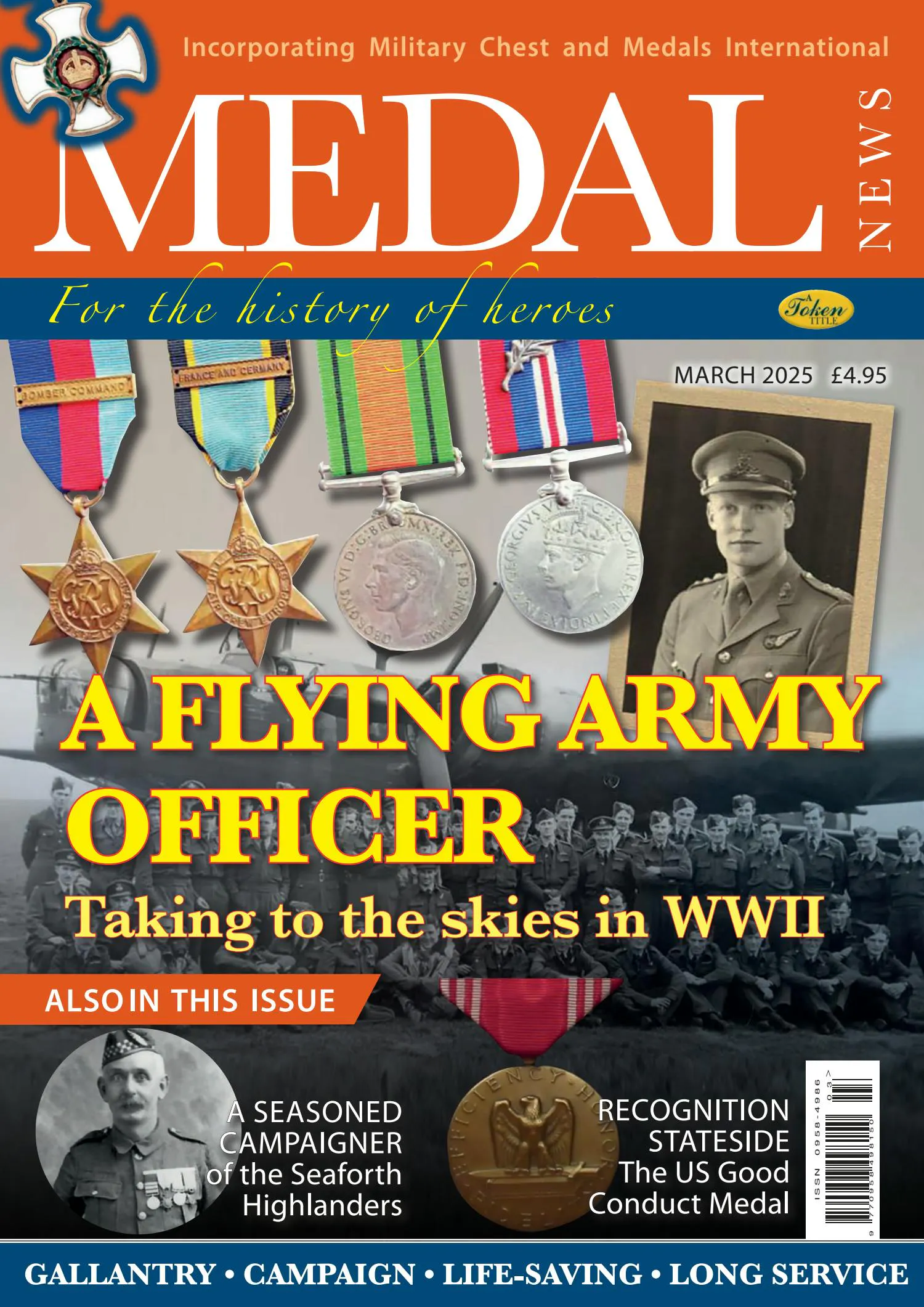
A Flying Army Officer
Volume 63, Number 3, March 2025
In praise of forgotten service THIS year marks the 80th anniversary of the end of World War II, and in May there will, undoubtedly, be poignant commemorations to celebrate VE Day and a little later, in August, the often overlooked VJ Day, and the final cessation of hostilities will be marked too. We will, I am certain, be treated to a variety of interviews and appearances by the few veterans of that conflict that are left, all now in their late 90s/early 100s. There are, of course, far fewer of these men every year (I say men because I am talking about combat veterans, there were, of course, many women who served and they will, I hope, be remembered too) and more fade away every year; before we know it, there won’t be any left at all. Will we, I wonder, realise it as we did with World War I veterans, or will they pass unnoticed? I will focus more on World War II veterans later in the year, but this month I’d like to focus on another group that are slowly disappearing before our very eyes, the National Servicemen. With the death of Ian Stewart, the man who designed the unofficial National Service Medal (and himself a National Serviceman in the Royal Navy, see “News & Views”, page 7), I was struck again by how there is a whole generation of men out there (women weren’t eligible after 1945) who were conscripted into service but who simply never received any official medallic recognition and now, it seems, probably never will. There has been much talk in recent years about the possibility of a non-operational service medal, a medal to be given in recognition of service regardless of what that service entails (the critics have dubbed it “a medal for doing your job”). The newly instituted Wider Service Medal (MYB198E) is seen as the first step towards that, but any new medal simply for serving is unlikely to be extended to veterans and that will mean that many of those who had little or no choice but to join up (there were exemptions and deferments of course, but eventually National Service caught up with most people) will remain with nothing to show for their troubles but a small Veteran’s badge. Those who served in operational zones as part of their National Service did, of course, receive the relevant campaign medal. I am not suggesting for one moment that they were treated differently to regulars in that regard, but those who were posted elsewhere, or stayed at home, simply didn’t receive any recognition at all. Post World War I conscription started in 1939 and lasted until 1960 (although until 1948 and the National Service Act of that year, it is usually counted as “War Service”), those born after October 1, 1939 were not called up but the last National Servicemen, those who had deferred previously, weren’t demobbed until 1963. Many of them served alongside regular servicemen in Palestine, Malaya, Kenya, Korea and in the Suez Crisis, and they will have received medallic recognition for that, but still more served in Germany or in random locations such as St Kilda off the Scottish coast (the Token Publishing title Soldiering on St Kilda tells the story of James McKay’s National Service on the remote island, it’s well worth a read) and they never received anything at all to mark their service. Any surviving National Servicemen are now in their 80s, most have long given up hope of an official medal (that’s why the unofficial one has proved so popular) and it is unlikely that any UK Government will do what the French did with the Legion d’honneur for surviving World War II veterans and give out anything based on longevity, there simply isn’t the political will, or cash, for such an award (the French rather regretted their decision, there were far more veterans still around than they thought). Thus, those who saw National Service will slowly, quietly disappear. There won’t be interviews with them, they won’t be remembered as World War II veterans are, theirs is a different story, but as we gear up to commemorate the end of hostilities in 1945, please don’t overlook your family, neighbours or friends who served after that conflict; they might not have a chest full of medals to wear in May or on Remembrance Sunday in November, but they served too and even if they never receive any formal recognition, their service deserves to be recognised by us at least.
Order Back Issue
You can order this item as a back issue, simply click the button below to add it to your shopping basket.