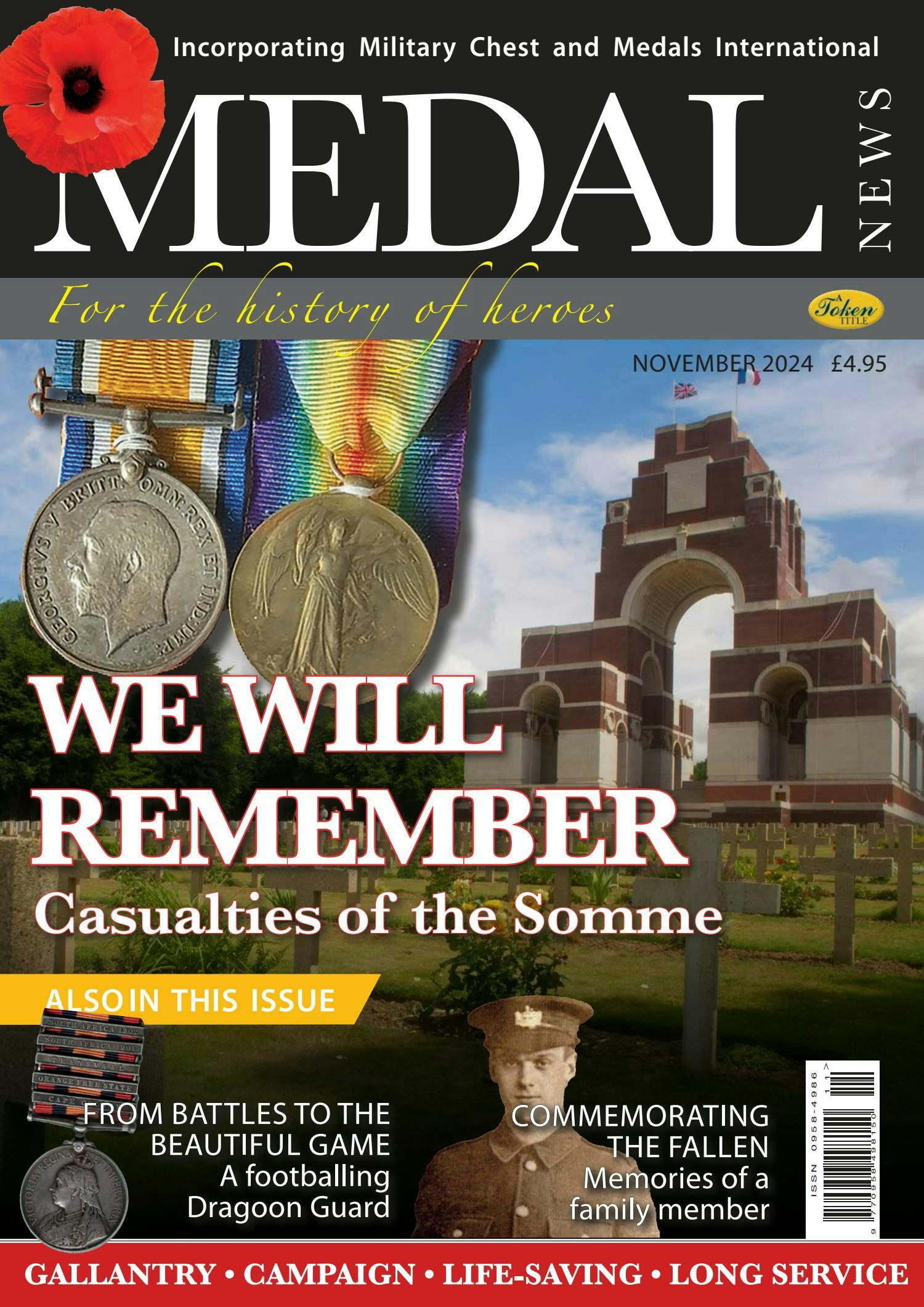
We will remember
Volume 62, Number 10, November 2024
We must remember AS we go to press, so the Royal British Legion “Poppy Sellers” are appearing in supermarket foyers and on station concourses. Those of you who pay attention to such things will undoubtedly have noticed that if those collecting this year are wearing medals then they are different medals to the ones we have seen in the years gone by. Few Poppy Sellers, if any, will now sport World War II Stars on their left breast; instead, you’ll see GSMs, South Atlantics, the odd Gulf here and there, but I am afraid the days of seeing the recipients of the 1939–45 Star et al proudly wearing their “gongs” are coming to an end. Those World War II veterans still with us are all in their late 90s or older and the days of them sitting behind tables in drafty halls are probably behind them. Whilst some will be at the Cenotaph on Sunday, November 10, they are likely to be in wheelchairs rather than marching as once they did. That they can no longer march won’t diminish the occasion for them, or us, and they will still wear their medals with pride and remember those who never made it home, but there are fewer remembering these days, fewer to keep the memories of 80 years ago alive. World War II is ancient history for most under the age of 30 today—they aren’t even taught about it much at primary school (the curriculum concentrates on the Home Front and rarely are battles ever mentioned, who the enemy was is usually glossed over quickly with the “Nazis” being accorded an identity that keeps them very separate from “Germans”, almost as if there were a different country altogether called Naziland or similar). That means that when it comes to this time of year, the two minutes silence on November 11, the march in Whitehall, the Poppies, fewer than ever know what it’s really all about. That, of course, is where we come in. Even if you don’t collect World War I or World War II medals, you will, I am certain, have a knowledge of both conflicts; most of us will have known someone who fought in one or other (or both!) and we know what Remembrance Sunday and the Poppies are all about. Over the past few years, I have, every November, exhorted you to look at the medals you are the current custodians of and try to remember the recipient as a person rather than just a name in your collection, have encouraged you to take one or more medals or groups that you may have and acknowledge the debt paid by the young man or woman who was once awarded them. Some paid the ultimate price, but even if they made it back from war, their lives were never the same again, and that must be remembered. This year, I ask you to go further. Don’t just look at your medals differently, don’t just try to remember the recipient yourself but turn to others you may know—your children, your grandchildren—and tell them a little about who it was that was awarded those medals, what they did, where they served and why they were there. There are no veterans of the First World War with us now, few from the Second, and one day those of us who knew those who served will be gone too—what will be left are the bits of metal and silk that we have made our hobby. They will long outlast us all and will, one day, be the only connection anyone has to those who actually fought. Yes, there will be guns and tanks and uniforms, there’ll be militaria galore, but militaria is impersonal, medals are not, they are very, very personal and give us a direct link to the people we remember now. As the old soldiers fade away, only their memory lingers on, but memories fade, too, and we must do our utmost not to let them, and to pass on what we know to those who come later. It is, I think, our duty, and one we should take seriously.
Order Back Issue
You can order this item as a back issue, simply click the button below to add it to your shopping basket.